

Views: 0 Author: Site Editor Publish Time: 2026-03-25 Origin: Site


You want your marina to do well, but problems can happen. Water levels change and make things hard each day. Maintenance and insurance cost a lot of money. If you ignore the environment, it can hurt habitats and pollute water. You need something that gives safe and easy access for all people. A floating pontoon, like an aluminum floating pontoon or a concrete floating pontoon, helps you solve these problems and keeps your marina running well and friendly.
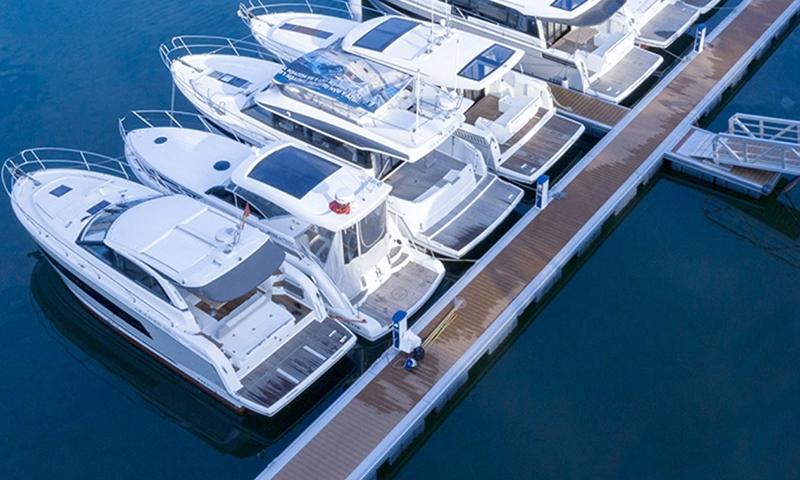
Modular floating pontoons move with water levels. They help people reach boats safely, even during tides or floods.
These pontoons need little care. This saves time and money. They last over 20 years because they use strong materials.
Floating pontoons are good for the environment. They do not bother marine life much. Sunlight can still reach plants underwater.
The modular design lets you change the dock easily. You can make it bigger or change its shape. This helps as your marina gets larger.
Picking a floating pontoon makes things better for users. It gives safer and easier docking for everyone who visits.
A floating pontoon is a strong platform. It floats and moves up and down with the water. You do not have to worry about water levels changing. You can use it for many things. It works for docking boats or making walkways. Old fixed docks stay in one place. A floating pontoon uses a modular system. This lets you build it in many shapes and sizes. You can make it fit your marina.
You can design your marina how you want. You can add or take away parts when you need to. You do not need big machines or long building times. You can grow or move your dock as your marina gets bigger.
Here are the main parts of a modular floating pontoon system:
Component Type | Description |
|---|---|
Pontoon Floats/Cubes | Filled with foam for safety and floating, common sizes like 500x500x400mm. |
Pontoon Logs/Tubes | Round floats for bigger boats and houseboats, often with lifting strakes. |
Nose Cones | Pointed parts that help reduce drag and make moving easier. |
Straight Sections | Main floats that give stability and keep the dock up. |
Concrete Floats | Very stable for heavy-duty uses. |
Inflatable Platforms | Vinyl mats for fun floating docks. |
Choice of Kits | Full kits (frame, hardware) or single floats. |
Component Compatibility | Checked mounting channels and connectors for easy assembly. |
Intuitive Assembly | Cubes that lock together, bolts, or quick pins. |
Each part connects simply. You do not need special tools or skills.
You can put a floating pontoon in almost any marina. The modular design lets you match any layout. You can make straight lines, T-heads, or finger piers. You can change the shape to fit your space and boats. The floating pontoon moves with the water. You always have safe and easy access.
You start by checking the site and making a plan. You work with a dealer to follow local rules. You pick the best anchoring system for your spot. You snap or bolt the pieces together. You finish with a strong dock that needs little care. You only need to clean it sometimes. You save time and money. You get a dock that works all year.
You want to get on your boat quickly and safely. A floating pontoon makes this possible every day. The dock moves with the water, so you never have to climb up or down awkward steps. You do not need to worry about low water making your dock unsafe. You can always reach your kayak, canoe, or boat without trouble.
The dock adjusts with the water, so you always have the same step onto your boat.
You avoid dangerous gaps or slippery surfaces.
You can use your marina in any season, even when water levels change.
Water levels change all the time. You need a dock that keeps up. A floating pontoon rises and falls with the water. You do not have to adjust anything. The dock stays at the right height for your boat.
The dock floats on the water and moves up or down as the water changes.
You always have a safe and steady platform.
You do not need to worry about tides, floods, or droughts.
The dock works well in places with big water level changes.
You get a dock that fits your marina, even if the water changes every day.
You want a dock that lasts for years. You do not want to spend time or money fixing it. A floating pontoon uses strong materials that fight off rust, sun, and water damage. You clean it sometimes, and it stays strong.
Material | Properties |
|---|---|
High-Density Polyethylene (HDPE) | Tough, resists impacts, does not rust, easy to clean |
Marine-Grade Aluminum Alloys | Strong, light, does not corrode, lasts long |
Expanded Polystyrene (EPS) Foam | Keeps the dock floating, does not soak up water, stays solid |
Protective Additives | Stops sun damage, keeps colors bright |
You save money because you do not need to paint, stain, or replace parts often. The dock stands up to storms and busy days at the marina.
You care about the water and the animals that live there. A floating pontoon helps you protect the shoreline. You do not need to dig or build underwater. You use less heavy equipment, so you do not disturb fish or plants.
Fixed docks can hurt the seabed and use more materials.
Floating pontoons need less anchoring and do not damage the bottom.
The dock floats and lets light reach the water, which helps plants grow.
You can choose eco-friendly materials that do not pollute.
You want a dock that fits your needs all year. A floating pontoon gives you options. You can move it, add to it, or take it apart. You can set it up for summer and store it for winter. You can change the shape if you get new boats.
The dock is easy to install and remove.
You can expand or shrink it as your marina grows.
You do not need big machines to move it.
The dock works for many uses, from swimming to fishing.
A floating pontoon gives you freedom. You can make your marina work for you, season after season.
You might think a fixed dock is a good idea. But fixed docks have many problems. Water levels can go up or down. Storms can hit and cause trouble. Look at the table to see the main problems:
Disadvantage | Description |
|---|---|
Accessibility Issues | Fixed docks can be too high or underwater. This makes them hard or unsafe to use when water rises or falls. |
Costly Maintenance | Fixed docks get damaged by water, storms, or erosion. You spend more time and money fixing them. |
Limited Flexibility | Once you build a fixed dock, you cannot change or grow it easily. Your marina cannot get bigger or adapt as you need. |
You want your marina to be safe and simple to use. Fixed docks often do not work when you need them most. They do not move with tides or floods. After a storm, your dock might be too high or underwater.
You do not have to deal with these problems. A floating pontoon is a better choice. It goes up and down with the water. You always have safe access to your boat. Check the table to see the main differences:
Aspect | Floating Pontoons | Fixed Docks |
|---|---|---|
Adaptability | Move up and down with water changes | Stay at one height, may be too high or low with tides |
Installation & Maintenance | Easy to install, need less care | Harder to build, need more repairs |
Stability & Strength | Float but can move a little | Strong, steady, hold heavy things and people |
Suitable Water Conditions | Great for places with big water changes | Best for calm water |
Vessel Use | Good for small boats and water sports | Better for big boats and lots of use |
User Satisfaction | Liked for being easy and flexible | Liked for strong, permanent uses |
Additional Uses | Not good for heavy furniture or equipment | Can hold furniture, grills, and parties |
You get more choices and fewer problems. A floating pontoon:
Moves with the tide, so you do not have low-tide issues.
Works during floods or dry times.
Is quick to set up and fits your marina’s shape.
Lets you make your dock bigger or change it as you need.
You want a marina that helps you, not makes things harder. Pick a floating pontoon and enjoy less stress, lower costs, and happy boaters all year.
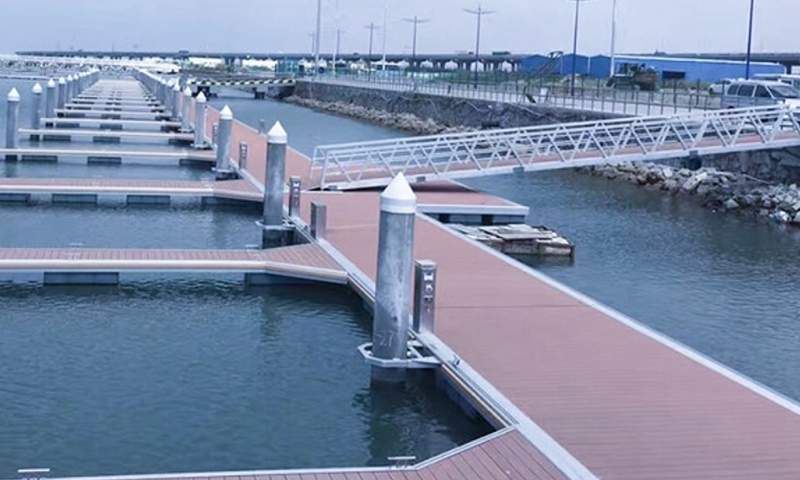
You want to make good choices for your marina. A modular floating pontoon is a smart way to save money. Look at the table below to see the costs:
Dock Type | Cost per Square Foot |
|---|---|
Fixed Dock | $25 - $45 |
Modular Floating Dock | $35 - $65 |
The starting price for a modular floating dock can be higher than a fixed dock. But you spend less money later. You do not pay for big repairs or upgrades. You can add or take away parts as your marina gets bigger. You skip large building jobs. You also spend less on care because the materials fight rust, rot, and sun damage.
You want to help the environment. A modular floating pontoon keeps the water and shore safe. Many floating pontoons use eco-friendly materials like:
HDPE (High-Density Polyethylene)
LLDPE (Linear Low-Density Polyethylene)
These materials last a long time and do not harm the water. Choosing a modular design helps the planet too. Here is how modular pontoons support sustainability:
Small modules let sunlight reach plants and fish under the dock.
The grid layout makes less shade and keeps marine life healthy.
You can build and move modules in regular shipyards, which lowers costs.
You do not need special factories, so you use fewer resources.
You can change your dock’s size and shape without waste.
You save money and protect nature with easy repairs and upgrades.
You want your marina to stay legal and safe. Before you install a modular floating pontoon, you must check the rules in your area. Most places require a permit for any dock installation. You need to follow these steps to avoid fines or delays:
Apply for a permit with your local or state agency. Each state has its own rules.
Keep your dock a safe distance from property lines. Most areas require 10 to 25 feet of space.
Follow size and length limits. Many places cap docks at 100 feet long and between 200 to 1,000 square feet.
Use approved materials. Some materials, like CCA treated wood, are banned to protect fish and plants.
Learn the rules for floating docks. These can differ from fixed docks, especially for anchoring and environmental impact.
Install proper lighting and railings. You may need handrails for safety and lights that do not disturb wildlife.
Make sure your dock does not block navigation channels or public access.
You may find that floating pontoons need fewer permits than fixed docks. Many towns do not require a permit for floating docks because they do not disturb the shoreline. You should always check with your local office. Some states ask for seasonal permits to protect water quality and plants. If your marina sits in a busy or protected area, you may need extra approval.
You can install a modular floating pontoon with simple tools and clear steps. You do not need heavy equipment or special skills. Here is how you do it:
Gather your tools. You need a hammer or mallet, a drill with a 5/16-inch bit, wrenches, and bolts.
Connect the modular sections. Align and stack the tabs, then secure them with fasteners.
Insert pins to lock the dock sections together. Use the assembly key for this step.
Tighten all tabs, pins, and couplers. Add more sections if you want a bigger dock.
Launch the dock into the water. Use a winch-assist system and attach safety lines.
Moor the dock. Connect it to a fixed structure like a seawall, or set it up as a stand-alone pier.
You can finish the job quickly and safely. You get a strong, flexible dock that meets all legal rules. You show your guests that you care about safety and the environment.
You want your marina to do well in the future. Floating pontoons help you handle water that goes up or down. They are easy to take care of and save you money. They also help keep the environment safe. Many owners say it is easier to get on boats. They feel safer and their guests are happier.
Floating pontoons move with the water, so you always have a safe dock.
You can change or make your dock bigger when you need to.
Eco-friendly materials help protect your shoreline.
Benefit | What You Gain |
|---|---|
Cost Savings | Less work to keep up, docks last longer |
User Experience | Safer and easier to use docks |
Environmental Impact | Little harm, helps animals and plants |
Pick a modular floating pontoon to keep your marina ready for anything. Your guests will enjoy their time at your marina even more.
You get a dock that lasts over 20 years. Strong materials like HDPE and marine-grade aluminum resist sun, water, and impact. You save money because you do not need to replace parts often.
You can add more sections anytime. The modular design lets you grow your dock as your marina gets bigger. You do not need special tools or heavy equipment.
You get a stable platform that moves with the water. Low step heights and non-slip surfaces make boarding safe for everyone. You protect your family and guests.
You clean the dock with soap and water. You check connectors and anchor points once a year. You do not need to paint or stain. You spend less time on upkeep.