
Views: 0 Author: Site Editor Publish Time: 2026-04-16 Origin: Site


Water levels never stay the same for long in a working marina. Tides shift, boats move, and dock traffic changes throughout the day, so concrete pontoons are designed to do much more than simply float. They are built to function as stable marine platforms that remain usable under changing real-world conditions. For Horizon Marina, this is an important point, because customers often want to know not just why a pontoon floats, but how it actually works in daily waterfront use.
A concrete pontoon is not just a floating base. It becomes a working marine structure when the pontoon body, deck surface, connection points, and hardware are designed as one system. The body supports the platform on the water, the deck creates the usable surface, and the fittings help the dock connect with boats, adjacent sections, and service systems.
That combination is what makes the platform practical in real marina use. A dock must support walking, docking, and day-to-day operation without feeling unstable or incomplete. This is why a pontoon should be understood as part of a coordinated dock structure rather than as a simple float.
Floating is only the starting point. In a marina or floating dock project, the platform also needs to support movement, access, and regular use. Concrete pontoons are valued because they combine buoyancy with structural stability, allowing them to serve as reliable working platforms in demanding waterfront environments.
One of the most important ways a concrete pontoon works is by moving vertically with the water. As tides or water levels change, the platform rises and falls naturally. This movement is part of the design, not a problem. It allows the dock to stay functional when fixed structures would become less convenient or harder to use.
This is especially useful in marinas where water conditions vary through the day or across the season. The pontoon adjusts to the environment while continuing to provide a consistent platform for access and operation.
Although the pontoon moves with the water, it is not meant to drift freely. Anchoring and guide systems keep it aligned and secure. Depending on the project, this may involve piles, chains, or other positioning methods that allow vertical movement while limiting unwanted lateral motion.
This controlled movement is essential in real marina operation. It helps keep berths usable, preserves walkway continuity, and makes the dock safer and more practical during vessel activity. A concrete pontoon works best when the floating structure and the control system are planned together.
System element | What it does | Why it matters in daily use |
Floating body | Supports the platform on water | Keeps access available through water-level change |
Anchoring or guide system | Controls position | Reduces drift and keeps berths usable |
Connection hardware | Links sections together | Helps larger layouts act as one dock system |
Deck surface and fittings | Supports walking and docking | Improves safety and operation |
A working pontoon needs to handle more than its own weight. In daily marina use, it may support pedestrians, service staff, dock equipment, utilities, and the changing forces created by vessel berthing. For the platform to work properly, those loads need to be distributed in a balanced way.
This is one reason concrete pontoons are often preferred in busy waterfront settings. They offer a stable base that helps the dock remain calm and usable even when activity changes through the day. Better load handling also improves confidence for boarding, walking, and service access.
In many projects, pontoons are connected together to form marina walkways, floating docks, finger piers, or service areas. This is another important part of how concrete pontoons work. They can function as single units, but they are also highly effective as connected elements within a larger marine layout.
When linked properly, multiple pontoons help create an organized dock network that supports circulation and berth access across the site. This flexibility makes them suitable for both compact installations and larger marina developments.
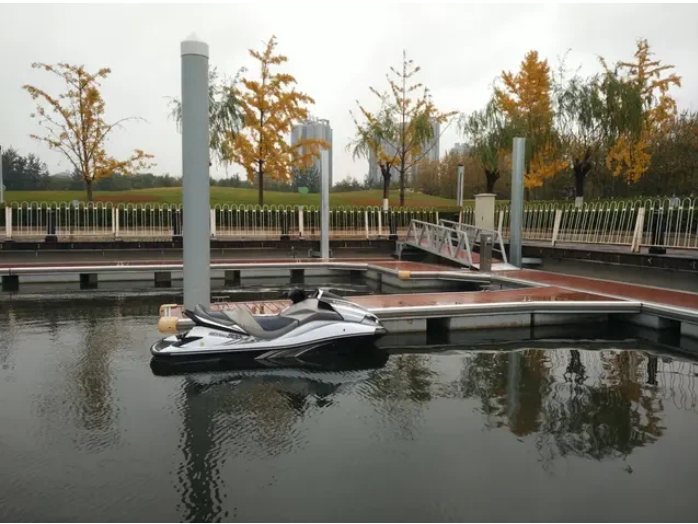
A pontoon becomes much more valuable when it supports marina operations directly. Floating alone does not make a dock fully functional. In many projects, the platform also needs to support cleats, fenders, lighting, water supply, power access, and other service features.
These additions turn the dock into practical infrastructure. A stable platform makes it easier to install and use these service elements effectively, which improves daily convenience for marina operators and visitors. This is also where a well-developed floating dock system shows its real value.
Operational performance is not only about fittings and equipment. It is also about how the dock feels during use. A stable pontoon helps people move more comfortably, makes docking feel more controlled, and supports smoother daily activity across the marina.
When the platform behaves predictably, the whole waterfront space works better. Users may not think about the dock itself, but they notice when movement is easy and access feels dependable.
A marina platform has to keep working in wet, exposed, and demanding conditions. Concrete pontoons are popular partly because their durable structure helps reduce repair pressure over time. In long-term projects, this matters a great deal. A dock that remains dependable can help reduce disruptions and support better overall operation.
Durability also affects appearance and long-term value. A platform that stands up well to repeated use helps the marina maintain a more professional and consistent environment.
Reliability is not only about strong materials. It also depends on smart design. A well-planned pontoon system should remain practical to use and maintain over time. Good structural planning helps the dock continue performing without creating unnecessary maintenance difficulty.
That is why real marine value comes from the full system, not just one material choice. A concrete pontoon works well over time when its structure, load capacity, movement control, and layout are all designed with actual site conditions in mind.
The way a pontoon works affects much more than flotation. If the platform can adapt to water-level changes, stay aligned, support traffic, and carry service functions reliably, the marina becomes easier to operate and more comfortable to use. Better dock performance improves both efficiency and user confidence.
This matters to project owners because they are not buying only a floating structure. They are investing in an operational waterfront platform that needs to perform every day.
A marina is shaped by the quality of its infrastructure. When the dock system works well, the whole project benefits from smoother circulation, better access, and stronger long-term usability. Concrete pontoons contribute to that value because they combine controlled floating performance with practical marine function.
Concrete pontoons work through a combination of coordinated flotation, controlled movement, load support, and durable marine design. The floating body supports the platform, the anchoring system keeps it aligned, and the deck and fittings turn it into usable marina infrastructure. That is why this type of system continues to perform so well in marinas and floating docks where daily reliability matters. Horizon Marina provides marine solutions built for real waterfront use. If you are planning a marina or dock project, contact us to learn more about a dependable Floating Pontoon solution for your application.
They rise and fall with the water, which allows the dock to remain usable under tides and normal level variation.
Anchoring and guide systems help control movement and keep the platform aligned in daily marina use.
Yes. They can support practical features such as cleats, fenders, lighting, and other marina service elements.
They combine stable flotation, structural durability, and reliable load support, which helps them perform well over time.