

Views: 0 Author: Site Editor Publish Time: 2026-03-30 Origin: Site


Purpose | Description |
|---|---|
Recreational Boating | More people spend money and time on boating. |
Water Sports | Many people now like different water activities. |
Tourism Industry Expansion | Tourism growth means more people want pontoons. |
Marina and Port Infrastructure Investments | Better facilities help people get on the water. |
Floating Platforms and Bridges Demand | More places need these in coastal and inland areas. |
Most people pick pontoons for fun. About 55% of pontoons are for recreation. Commercial uses are also important. Think about your site and if you want a permanent or temporary setup. Decide if an aluminum floating pontoon or a concrete floating pontoon fits your needs and budget. Every place is different, so focus on what matters most to you.
Think about what you want to do on the water. This will help you pick the best features for your floating pontoon.
Decide if you want your setup to stay or move. Floating pontoons can be moved, but fixed docks stay in one place.
Look at the water and weather where you live. Knowing these things helps your pontoon last longer and stay safe.
Pick your materials carefully. Aluminum, concrete, and plastic all have special good points for different needs and prices.
Get ready for changes later. Modular designs let you make your pontoon bigger or different if you need to.
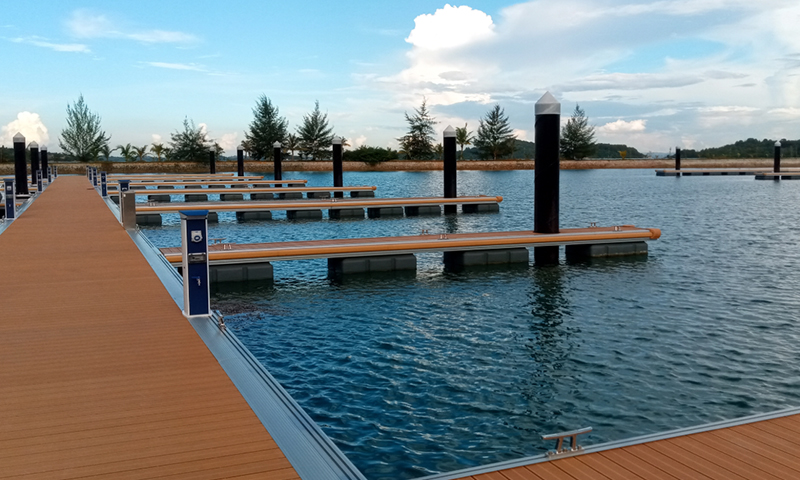
Your floating pontoon should match your life. First, think about what you want to do on the water. Do you want to swim, fish, or relax with friends? Maybe you need a strong place to park your boat or play water sports. Each thing you do needs something special.
Here’s a simple chart that shows how activities change your choice:
Activity | Design Considerations | Ideal Users |
|---|---|---|
Swimming & Sunbathing | Stable platform, easy water access, built-in loungers | Families, children, relaxation seekers |
Fishing | Steady base, rod holders, storage compartments | Avid anglers, weekend fishing trips |
Social Gatherings | Ample space, customizable layouts, floating ambiance | Parties, picnics, celebrations |
Water Sports | Tow points, safety features, easy reboarding | Adventure lovers, teens, groups |
Exploration & Cruising | Motor compatibility, shallow draft, scenic access | Nature enthusiasts, eco-tourists |
If you like swimming and sunbathing, look for soft seats and safe floors. If you love fishing, you need rod holders and places to keep your gear. For boating, you want a strong frame and spots to tie your boat. If you need storage, look for boxes and covers.
When you know your main activities, think about these things:
How deep is the water where you will use it?
Is the water calm or busy?
How much weight will you put on the pontoon?
Does the water level go up and down during the year?
These facts help you pick the right design and materials. You want your floating pontoon to last and work well for what you want to do.
Now, ask if you want your floating pontoon to stay in one spot or move. Some people want a permanent setup at home or work. Others want something they can move or take away when the season changes.
Here is a chart to compare both choices:
Feature | Floating Pontoon | Fixed Dock |
|---|---|---|
Adaptability | Adjusts to changing water levels | Fixed height, no flexibility |
Installation | Easier, less costly | Expensive, time-consuming |
Flexibility | Can be easily relocated | Cannot be relocated |
Maintenance | Requires occasional checks | Lower maintenance |
A floating pontoon is flexible. It moves with the water and works if the water goes up or down. You can also move it if you want to change places. This is good for places where water changes or seasons are different.
Here are some quick pros and cons:
Floating pontoon advantages:
Changes with the water
You can make it fit your needs
Easy to move or make bigger
Good for nature
Floating pontoon disadvantages:
May cost more at first
Might not feel steady in rough water
Fixed dock advantages:
Very strong and classic
Works well in calm water
Fixed dock disadvantages:
Hard to use if water changes
Costs more to build and fix
Stays in one place
Think about your spot and how you want to use your floating pontoon. If you want something that can grow or move with you, a floating pontoon is a smart pick.
You need to look at the water and weather where you want to put your floating pontoon. Cold winters can be tough. Ice and freezing temperatures can damage docks. Ice can push and pull on your dock, and broken pieces might hit it. When water levels go up and down in winter, your dock and its anchor lines get pulled. This can hurt the structure. If you live where winters are cold, you should think about how to protect your dock or even remove it during the coldest months.
Getting to your dock should be easy and safe. Some places have problems with water levels. When the water is low, fixed docks can be too high to reach. When the water is high, docks might go underwater and become dangerous. Here’s a quick look at common challenges:
Challenge | Description |
|---|---|
Low Water Levels | Fixed docks may be too high above the water, making access difficult. |
High Water Levels | Docks may become submerged, posing safety hazards for users. |
You want a dock that works well, no matter if the water goes up or down. A floating pontoon can help you stay safe and comfortable.
Rules for docks change from place to place. You need to check federal, state, and local laws before you build. Here’s a table to help you see what rules might apply:
Regulation Type | Key Points |
|---|---|
Federal Rules | Section 10 and Section 404 permits required for docks in navigable waters and wetlands. |
State Rules | Varies by state; examples include Florida's Submerged Land Lease and New York's size/material restrictions. |
Local Rules | City/county codes may impose stricter regulations, including height, lighting, and appearance guidelines. |
Some examples:
Florida asks for a Submerged Land Lease if your dock is over 500 square feet.
Texas often needs permits from local water boards.
New York limits dock size and materials on public lakes.
Picking the right material for your floating pontoon can be hard. There are many choices like aluminum, steel, concrete, plastic, and wood. Each material has its own good points.
Let’s look at the most common materials:
Material | Advantages | Applications |
|---|---|---|
Wood | Cost-effective, looks nice, easy to fix | Home docks, light-duty use |
Metal | Strong, lightweight (especially aluminum), handles heavy loads | Busy marinas, commercial settings |
Plastic | Super light, easy to clean, resists rust and sun | Family marinas, small floating docks |
Concrete is the most used for floating pontoons. People like it because it lasts long and stays steady in rough water. You see concrete pontoons in busy marinas or where there are big waves. Aluminum and steel are also picked a lot. Aluminum is light but strong. It is good if you want something easy to move and tough for saltwater. Steel is heavy and strong but can rust if not cared for.
Plastic pontoons are getting more popular for fun and family use. They are light, easy to put together, and need little care. Some are made from HDPE cubes. These cubes float well and do not get hurt by salt or acid.
Here’s a short list to help you remember:
Concrete: Lasts the longest and holds heavy things.
Aluminum: Not too heavy, strong, and good for most water.
Steel: Very strong but needs care to stop rust.
Plastic: Light, simple to use, and good for DIY jobs.
Tip: Think about where you will use your floating pontoon. If you have big waves, concrete or metal is better. For calm lakes or easy setups, plastic is a good choice.
You want your floating pontoon to last a long time. The material you pick changes how much work you do and how long your dock stays safe.
Let’s compare the main materials:
Material Type | Weight | Corrosion Resistance | Lifespan | Durability and Use Case |
|---|---|---|---|---|
Marine-Grade Aluminum | Moderate | High (with treatment) | 20–30 years | Good for saltwater, needs some care |
Concrete Pontoons | Very heavy | Moderate (watch for rebar rust) | 30–50 years | Best for rough water, longest life |
HDPE (Plastic Cubes) | Ultra-light | Immune to rust and acid | 15–20 years | Great for easy installs, flexible use |
Aluminum pontoons last many years if you check for rust and clean them sometimes. Concrete pontoons can last up to 50 years, but you need to look for cracks or rust inside. Plastic pontoons need almost no care. Just rinse them and check for cracks.
Here’s what to do for each type:
Aluminum: Look for dents and clean off dirt. Check for rust near bolts.
Concrete: Look for cracks and make sure the metal inside is not rusty.
Plastic: Rinse with water and check for fading or cracks.
Wood: Look for splinters and rot. Tighten any loose boards.
Material | Maintenance Requirement | Seasonal Tasks |
|---|---|---|
Wooden | Look for damage, check anchors and floats | Clean off debris, check for wear before each season |
Aluminum | Watch for rust, check structure | Clean and inspect for damage, especially after storms |
Composite | Check for brittleness and fading | Clean and inspect during busy months |
Picking the right material helps you enjoy your floating pontoon more. You get more fun and less work when you match your dock to your water, weather, and how much time you want to spend on care.
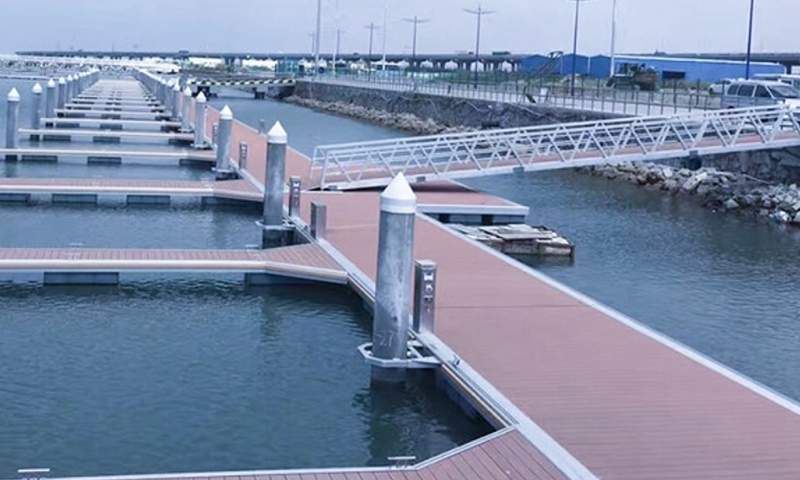
When you start looking at floating pontoons, you will notice prices can change a lot. The size, material, and features all play a part. A small, simple dock costs less than a large, custom one with extras like built-in seating or lighting. Materials matter too. Plastic and wood pontoons usually cost less up front. Aluminum and concrete cost more but last longer.
Here’s a quick look at what affects your first payment:
Factor | How It Impacts Cost |
|---|---|
Size | Bigger pontoons cost more |
Material | Concrete and aluminum cost more |
Custom Features | Extras like railings add to price |
Location | Remote sites may cost more to reach |
If you want to save money, start with a basic design. You can always add more features later.
After you buy your floating pontoon, you need to think about installation and yearly care. Some docks are easy to set up yourself, while others need a pro. If you pick a removable dock, you can take it out for winter. This helps protect it and saves money on repairs.
Ongoing costs can include:
Storage: Indoor storage gives the best protection but costs the most. Outdoor storage is cheaper but exposes your dock to weather. Covered storage sits in the middle.
Maintenance: You need to check the engine, battery, and clean the hull. Doing this often helps you avoid big repair bills.
Winterization: Getting your dock ready for cold weather usually costs between $150 and $500.
Insurance: Don’t forget to add insurance to your budget.
Temporary docks cost less to maintain. You can remove them in the off-season, which keeps them safe from storms and ice. Permanent docks stay in the water all year, so they need more repairs and checks.
Taking care of your dock means you get more years of fun on the water and fewer surprises in your wallet.
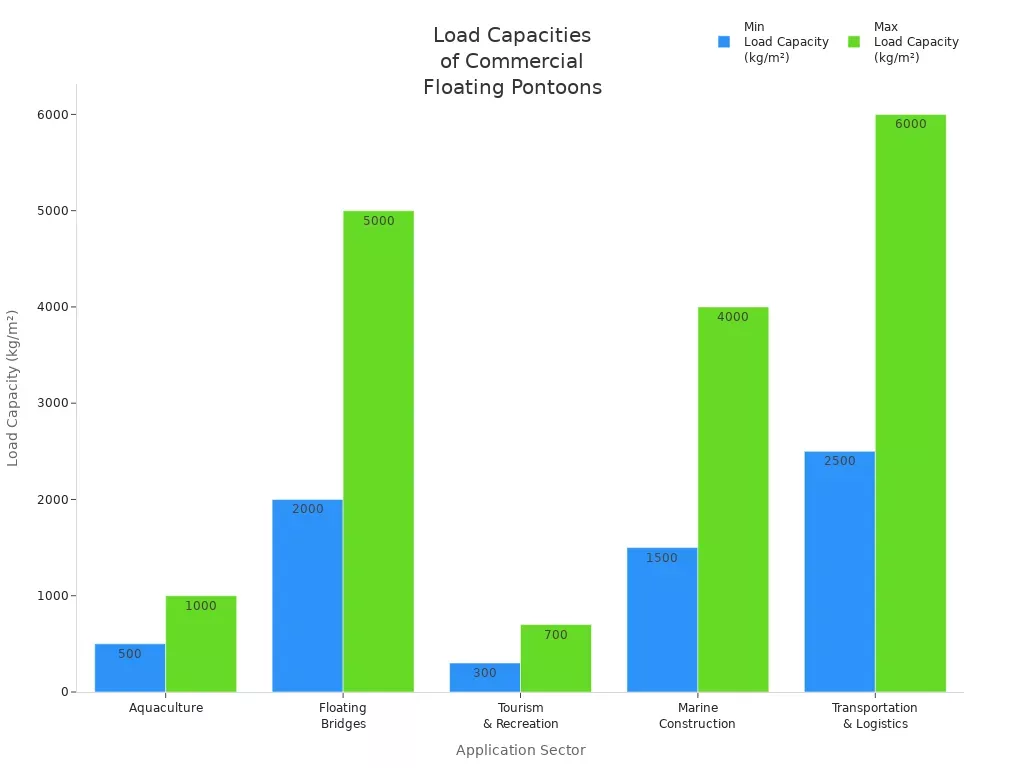
You want your floating pontoon to hold everything you need. Load capacity shows how much weight your dock can take safely. Commercial pontoons can carry more than 100 pounds for each square foot. Manufacturers say you should use only about 75–80% of the rated load. This keeps your dock steady and safe. Residential docks usually hold 30–50 pounds per square foot. Fishing platforms can go up to 75 pounds per square foot. Commercial docks can handle even more weight.
Application Sector | Load Capacity Range (kg/m²) | Approximate Load Capacity (lbs/ft⊃2;) |
|---|---|---|
Aquaculture | 500–1,000 | ~102–205 |
Floating Bridges | 2,000–5,000 | ~410–1020 |
Tourism & Recreation | 300–700 | ~61–143 |
Marine Construction | 1,500–4,000 | ~307–815 |
Transportation & Logistics | 2,500–6,000 | ~512–1225 |
Stability is just as important as load capacity. You want your dock to stay steady when people walk or waves hit. Safety rules say pontoons must handle both still and moving loads. Watertight bulkheads help keep the dock balanced. Access to void compartments lets you check and pump them if needed. The rated capacity must include extra weight from wind, waves, and uneven loading. Limits for list and trim stop your dock from tipping too much.
Your needs can change as time goes on. Maybe you want more space or a new layout. Modular designs make this easy for you. You can add new sections, change the shape, or put in railings and storage. Modular pontoons use strong materials like concrete, metal, or high-density polyethylene. This makes them tough and flexible.
Modular systems let you make your dock bigger or change its shape.
Semi-modular and fully modular pontoons are easy to build and customize.
Floating pontoons adjust to water level changes, so you can always get on safely.
You can pick the size, shape, and features for home, business, or fun.
Modular docks can hold pumps, turbines, and other equipment for work.
Aspect | Description |
|---|---|
Customizable Configurations | Modular designs let you choose different setups for your needs. |
Flexibility | You can move or change pontoons for new places or uses. |
Scalability | Modular docks grow with you, which saves money over time. |
Floating pontoons are becoming better for the environment. Builders now use materials that last longer and help nature. Many new docks use recycled plastics and metals. These materials keep lakes and rivers cleaner. They also make less trash because you can recycle them again later.
Here’s a simple table with some eco-friendly materials:
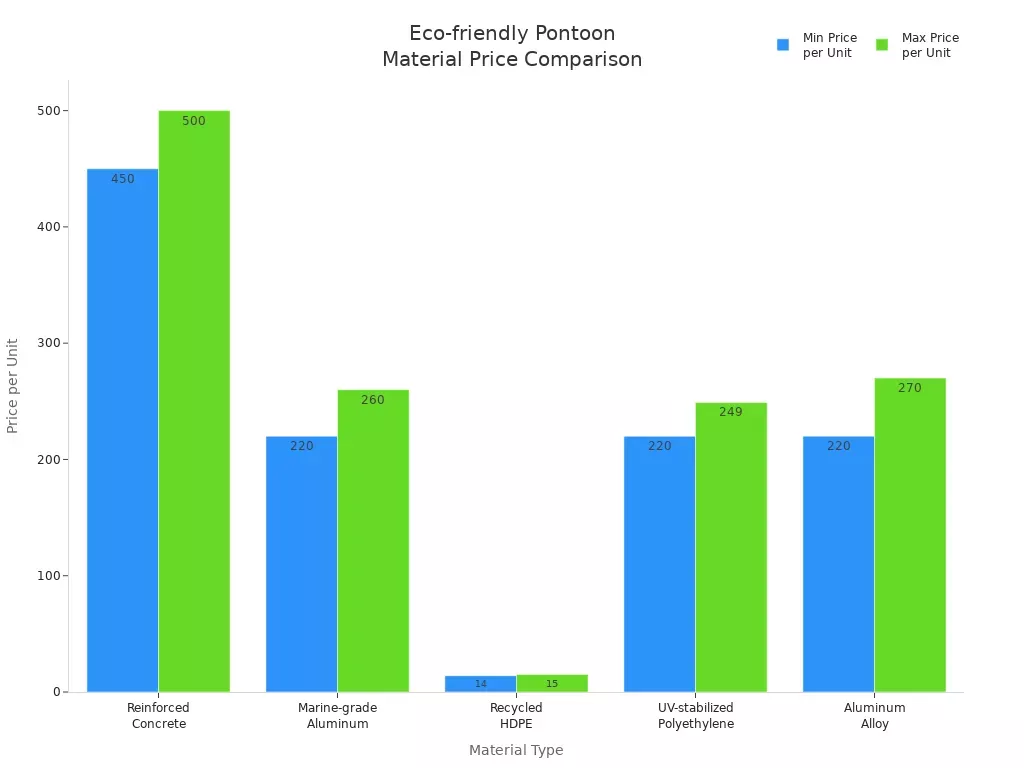
Material Type | Key Attributes | Price Range |
|---|---|---|
Reinforced Concrete | Handles cold, holds heavy loads | $450-500/m² |
Marine-grade Aluminum | Does not rust, can be recycled | $220-260/m² |
Recycled HDPE | Lasts over 30 years, easy to change | $14-15/piece |
UV-stabilized Polyethylene | Won’t slip, resists chemicals | $220-249/m² |
Aluminum Alloy | Strong, works in saltwater | $220-270/m² |
If you pick recycled HDPE or marine-grade aluminum, you help the earth. These materials last a long time and can handle bad weather. Modular docks let you fix or swap parts instead of throwing away the whole dock. This means less garbage. Floating pontoons are also good for fish and plants. They do not dig into the ground under the water.
New floating pontoons have cool features that make them safer and easier to use. Some docks can stay flat even if people move around. Many have surfaces that stop you from slipping. Rounded corners and soft joints help keep you safe and stop cracks.
Here are some smart features you might want:
Feature | Description |
|---|---|
Automatic leveling | Dock stays flat when weight moves. |
Emergency flotation | Dock floats even if one part breaks. |
Slip-resistant surfaces | You won’t slip, even when it’s wet. |
Rounded edges and corners | Less chance of getting hurt if you bump it. |
Flexible connections | Dock bends with waves, so it does not break. |
Load spreading technology | Weight spreads out for better balance. |
Dynamic stability | Dock changes how it floats as people move. |
Safety margins | Extra strength built in for safety. |
Some docks have solar panels for lights and power. These save energy and help nature. Many new docks can change size if you need more or less space. You can add or take away parts. This helps your dock last longer and stay useful.
Tip: If you pick a floating pontoon with smart features and green materials, you get a dock that is safe, strong, and helps the planet.
Choosing the right floating pontoon gets easier when you follow a few smart steps. Start by thinking about how you want to use it and what you need it to hold. Look for materials that last through tough weather, UV rays, and saltwater. Check that your dock fits your site and budget. If you feel unsure, talk with a dock expert. Your needs might change, so pick a design that can grow with you.
Define your main use and capacity.
Pick strong, weather-resistant materials.
Make sure it fits your site and budget.
Ask for certifications and test reports.
Plan for future changes or upgrades.
Remember, a little planning now means more fun and less stress later.
You want a material that fits your water and weather. Aluminum works well for saltwater. Concrete lasts longest in rough water. Plastic is light and easy for small docks. Pick what matches your needs and budget.
You should remove your pontoon if you get ice. Store it in a dry place. If you can’t move it, use bumpers and check for damage after storms. Ask local experts for tips.
Yes! Many pontoons use modular designs. You can add or change sections as your needs grow. Look for docks with easy-to-connect parts. This helps you expand without starting over.
Most places require a permit. Check with your city or county office before you build. Rules change by location. Getting the right permit saves you time and money.