

Views: 0 Author: Site Editor Publish Time: 2026-04-28 Origin: Site


Site planning for a marina is rarely about one platform doing one simple job. Different areas of the waterfront carry different demands, yet the base structure still has to deliver the same essentials every day: stability, durability, and dependable access. That is where concrete pontoons create real value. They are not only floating structures placed on the water. In marina and floating dock projects, they become the working foundation for circulation, berthing, service activity, and long-term operational confidence. For Horizon, this matters because customers are often comparing not just materials, but how well a platform will perform across the entire site.
The main walkway is one of the most demanding parts of any marina because it handles the highest level of foot traffic. Guests, staff, maintenance teams, and boat owners all rely on this route, often many times a day. When the primary access line feels unsteady, narrow, or overly reactive to movement, that affects the entire waterfront experience. A marina may look impressive from a distance, but if the walkway feels uncertain underfoot, confidence drops immediately.
Concrete pontoons work especially well in this area because they provide a calm and substantial base for everyday circulation. Stable movement matters more than many project owners first expect. It affects how easily people carry gear, how safely they move in wet conditions, and how comfortable the marina feels during peak hours. In practical terms, a strong main walkway supports smoother traffic flow and makes the whole site feel more organized.
This is also where long-term performance becomes visible. The main route is the part of the dock system people notice most often, so it needs to keep looking and performing well over time. A well-supported concrete platform helps preserve that consistency.
Berthing zones ask for a different kind of performance. Here, the platform must support vessel access, boarding, mooring activity, and movement between dock and boat. A berth does not need to feel identical to a main walkway, but it does need to feel calm and dependable. If the dock reacts sharply or feels unsettled during normal vessel use, boarding becomes less comfortable and the entire berth can feel less controlled.
Concrete pontoons create value in these areas because they help support a more predictable floating behavior. That matters when people step between vessel and dock, handle lines, unload equipment, or assist passengers. Reliable mooring is not only about hardware. It is also about the quality of the platform beside the vessel.
For marinas that want to improve both function and impression, this link is important. A berth that feels stable helps daily operation run more smoothly and makes the marina feel better managed overall. In many projects, that practical effect is one of the main reasons concrete pontoon systems are chosen.
A floating dock is expected to respond to changing water levels without losing its usefulness. Tides, seasonal variation, rainfall, and local operating conditions can all change how the waterfront behaves. Fixed structures may work well at one level and become awkward at another. Floating systems answer that challenge more directly by moving with the water.
This is one of the strongest reasons concrete pontoons fit floating dock applications so well. They allow the platform to rise and fall with the water while continuing to support access. That makes them especially valuable in sites where level changes are part of normal operation rather than an occasional problem.
For project planners, this flexibility is not a minor technical benefit. It affects whether the dock remains practical through everyday conditions. A platform that can adapt naturally to changing levels supports more reliable use and reduces the need to work around environmental limitations.
Safety and comfort are often discussed separately, but on a floating dock they are closely related. A platform that feels steady under normal movement helps people walk with more confidence, board vessels more easily, and carry equipment with less hesitation. This is true for guests using the dock occasionally and for staff who move through the site every day.
Concrete pontoons help create that stronger daily experience because the platform typically feels more composed in use. That feeling matters in wet conditions, during boarding, and in areas where people are loading or unloading gear. Daily tasks become easier when the dock surface behaves in a predictable way.
Comfort also influences how the whole waterfront is perceived. A dock that feels calm and solid makes the project appear more reliable and more carefully planned. In floating dock applications, that impression can be just as valuable as the engineering itself.
A floating dock is not used only when a boat arrives. It is part of a full daily routine. Staff inspect berths, users move equipment, visitors board and step ashore, and service activity takes place throughout the day. A platform that stays dependable during all of that creates far more value than one that only performs adequately under light use.
This is where concrete pontoons show a practical advantage. They help the floating dock remain consistent across repeated movement and routine operational demands. That reliability becomes especially important in busy projects where small inconveniences quickly add up. Better access supports better service, smoother movement, and a more efficient waterfront layout.
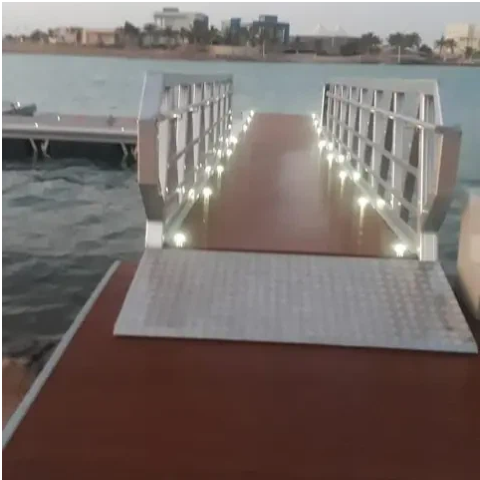
Not every dock area is used in the same way. Service-heavy zones often face greater pressure because they may involve equipment handling, utility activity, repeated staff movement, or heavier operational use than general access areas. In these parts of a marina, the platform needs more than basic flotation. It needs the structural confidence to support harder daily work.
Concrete pontoons are well suited to these areas because strong load support helps the platform stay dependable when activity is more intense. This does not only matter for safety. It also affects efficiency. A service area that feels secure is easier to use, easier to manage, and better suited to the demands of routine marina operations.
A dock surface has to do more than exist above the waterline. In work-oriented areas, people need reliable footing in wet conditions, during repeated movement, and while handling gear. Surface performance directly affects how comfortable and safe the dock feels in real use.
This is especially important in places where staff are working quickly or where visitors may be less familiar with marine conditions. A well-performing surface supports steadier movement and reduces the sense of uncertainty that can come with wet, exposed environments. In practical marina planning, that kind of everyday usability is a major part of platform value.
Marina area | Main operational need | Pontoon feature to emphasize |
Main walkway | Smooth pedestrian movement | Stability and durable deck support |
Berthing zone | Reliable boarding and mooring | Calm floating behavior |
Service dock | Utility access and heavier use | Strong load support |
Guest access area | Better first impression | Clean appearance and comfort |
Service-focused zones often need more than open deck space. They may require mooring points, protective edge details, utility access, lighting, or other integrated components that turn the platform into working infrastructure. These fittings increase the practical value of the dock and shape how effectively the area can be used.
A stable pontoon base supports this kind of integration well. The result is a dock area that does not only float and connect to the shoreline, but actively supports marina operations. This matters in projects where the platform must serve several purposes at once without feeling overloaded or improvised.
Many marina areas are not purely one thing. A section may function as access space, vessel interface, and light service zone at the same time. That mixed use is common in real projects, which is why the platform needs to perform well across multiple demands rather than in one narrow scenario.
Concrete pontoons help these mixed zones work better because they offer a stable and durable base that supports overlapping activity. That makes them valuable not only in specialized service areas, but also in flexible spaces where the dock has to do more than one job well.
Long-term marina performance depends on whether the platform continues to support daily operation without becoming a source of interruption. Strong infrastructure helps reduce repair pressure, preserve access, and maintain a more consistent site image over time. That is why concrete pontoons create value beyond the first installation stage. They help protect how the marina functions month after month and season after season.
This long-term effect is also where the broader waterfront experience is shaped. A dock that remains stable, usable, and presentable supports customer confidence and smoother operations at the same time. That is especially important in marinas and floating dock projects where the platform is always visible and always in use. Every advantage described in this article comes back to that same application focus: better circulation, steadier mooring, safer service activity, and more reliable waterfront operation. When the discussion stays tied to real marina use, the product value becomes much clearer.
Concrete pontoons are not only floating platforms placed where water access is needed. In marinas and floating docks, they become the foundation for steady walkways, calmer berthing, stronger service zones, and more reliable day-to-day operation. That is why they create the most value in the areas where stability, durability, and practical access matter every day. Horizon Marina develops solutions for projects that need exactly that kind of dependable waterfront support. If you are planning a marina or dock layout and want to explore the right configuration for your site, contact us to learn more about a suitable Floating Pontoon solution.
They are especially useful in main walkways, berthing areas, service docks, and other zones where stable movement and dependable access are important.
Because floating docks need to remain usable through water-level change while still offering comfort, safety, and predictable daily performance.
Yes. They are well suited to work-oriented dock zones that need stronger load support, reliable footing, and integrated operational fittings.
They help reduce disruption, preserve daily usability, and support a more consistent waterfront experience over time.