

Views: 0 Author: Site Editor Publish Time: 2026-10-03 Origin: Site


Selecting the foundation for marine structures goes far beyond simple preferences. It acts as a strict engineering requirement dictated by harsh geotechnical realities. Many developers underestimate the kinetic forces acting below the waterline. Subjective decisions often lead to catastrophic dock failure over time. Facilities frequently experience dragging anchors, severe structural damage, or significant environmental compliance violations. Ignoring the seabed practically guarantees future liability and safety hazards. Water currents and wind continuously stress marine connections.
Here, we establish an evidence-based framework for evaluating different bottom compositions. You will learn exactly how mud, rock, and sand dictate the viability and safety of various stabilization methods. We detail the mechanical behaviors of soft silts versus hard bedrock. This guide ensures you map specific seabed data to the most appropriate commercial solutions. Every site requires a customized geotechnical approach. Relying on guesswork compromises the structural integrity of the entire marina.
Geotechnical assessments of the seabed must precede any anchoring system purchase; failure to do so invalidates performance guarantees.
A pile anchoring system offers superior stability but is economically unviable or physically impossible on deep bedrock.
Hard, rocky seabeds typically necessitate deadweight concrete anchors paired with heavy-duty anchor chain.
Eco-sensitive or highly tidal environments frequently require an elastic mooring system combined with helical anchors to minimize benthic disruption.
We must measure successful deployments by consistent load-holding capacity under peak conditions. The chosen hardware cannot drag during extreme weather events. It must prevent any noticeable substrate degradation over its lifespan. A robust setup also resists excessive component wear from friction. Marine engineers calculate these thresholds using strict safety factors. You achieve success only when the structure remains fully stationary against prevailing currents.
Ignoring seabed conditions introduces massive liability and financial risks. For instance, helical anchors will shear violently when forced into solid rock. Deadweights often sink entirely into deep, loose silt. This continuous sinking leaves them irretrievable and structurally useless. Misaligned hardware often leads to sudden connection failures during severe storms. These failures damage adjacent vessels and threaten human safety. Facility owners face heavy fines for negligent marine engineering practices.
We strongly recommend professional core sampling before planning. Certified diver surveys provide critical visual data regarding the bottom layout. You must conduct these comprehensive tests before shortlisting a floating dock anchoring system. Relying on visual assumptions guarantees project delays. It also causes severe engineering failures during the installation phase. Geotechnical data serves as the foundational blueprint for your entire marina project.
Every underwater substrate presents unique mechanical behaviors. We must adapt our engineering approach to these specific geological realities.
Soft bottoms pose a significant challenge due to extremely low shear strength. Heavy deadweight blocks sink continuously into these uncompacted layers. You eventually lose any ability to retrieve or inspect them. Standard drag anchors frequently fail to set properly in loose mud. They simply slice through the silt without grabbing solid ground.
Challenge: Extremely low cohesion allows heavy hardware to sink indefinitely.
Requirement: This environment demands deep-penetration solutions to reach compacted soil beneath. Alternatively, you can deploy wide-footprint friction systems. These wide bases distribute the downward load across a larger surface area. You must calculate the exact settling rate for mud environments carefully.
Solid bedrock completely resists standard underwater drilling equipment. Impenetrable surfaces demand specialized, high-cost mobilization efforts. You cannot force standard piles into these solid rock floors. The lack of soil penetration drastically limits your stabilization options.
Challenge: Standard boring tools break against solid stone surfaces.
Requirement: Engineers must specify high-mass surface-resting systems instead. Alternatively, specialized rock-pinning techniques provide necessary holding power. Rock-pinning involves drilling small sockets and grouting heavy steel pins. Coral beds present similar penetration issues but add strict environmental protection laws.
Granular beds constantly shift under natural tidal forces. They remain highly prone to intense scouring and abrasive action. Water currents push sand particles against submerged metal constantly. This constant motion rapidly degrades submerged hardware over a few seasons.
Challenge: Continual sediment shifting causes severe abrasive wear on connections.
Requirement: The environment requires self-burying capabilities to maintain long-term stability. You also need exceptionally high abrasion resistance for all connective components. Sand movement can actually expose previously buried foundations. Regular bathymetric monitoring helps track these shifting underwater dunes safely.
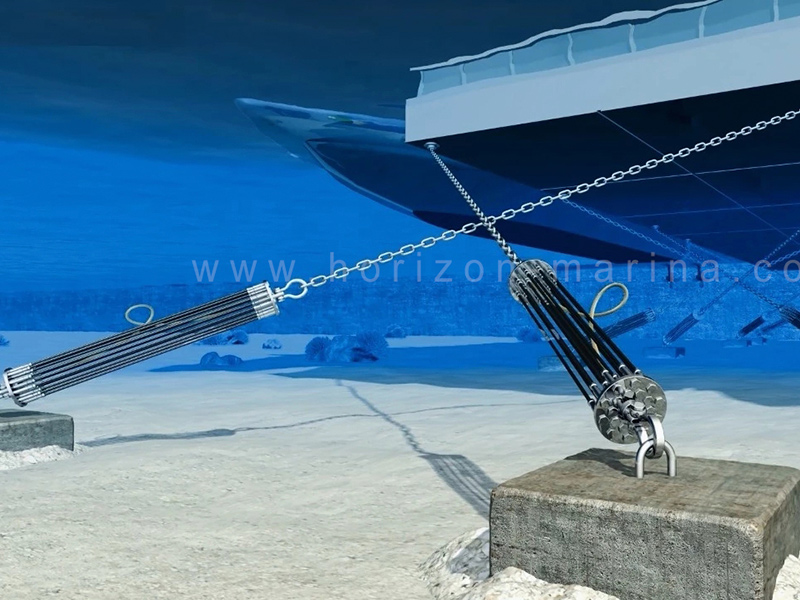
Let us align specific hardware to the geotechnical realities discussed above. Each format presents distinct mechanical advantages.
A pile anchoring system works best for firm mud, clay, and compact sand. You generally use them in manageable, shallower water depths. Marine contractors drive heavy cylinders deeply into the substrate using vibratory hammers. This robust setup allows the dock to ride up and down smoothly. It utilizes internal or external pile guides to manage tidal friction.
Note their physical limitations carefully during the planning phase. They remain completely unsuitable for hard bedrock environments. Pre-drilling into solid rock requires highly expensive mobilization. You also need heavy barge access for the massive pile-driving equipment.
Concrete deadweight blocks pair exceptionally well for hard rock or cobble bottoms. Deep-water applications also rely heavily on this traditional method. They provide crucial stability where driven piles remain physically impossible. The mechanism relies entirely on sheer mass to hold the structure.
The catenary curve of the anchor chain absorbs surface shocks effectively. However, this method requires a massive underwater footprint. You typically need a 3:1 or 4:1 scope ratio. They prove highly ineffective on steep underwater drop-offs. The heavy blocks easily slide down inclined sea floors during storms.
Helical solutions excel primarily in dense mud, clay, and compact sand. Crews hydraulically torque these large steel screws directly into the seabed. The wide helical plates provide massive pull-out resistance against vertical wave action. They lock firmly into undisturbed soil layers deep below the surface.
They hold zero viability in hard, rocky bottoms. The steel plates simply bend or snap against solid granite. However, they remain excellent for environmentally strict locations. They leave virtually no benthic footprint once fully installed.
An elastic mooring system thoroughly suits deep water and high tidal fluctuations. They actively protect environmentally sensitive seabeds like delicate seagrass meadows. The mechanism uses heavy-duty elastomers or flexible rubber cords. You attach them securely to helix foundations or deadweights.
This modern approach keeps all connective lines taut. It suspends the entire connection completely off the sea floor. You do face a higher upfront component cost initially. However, this setup drastically reduces seabed scouring. It also effectively eliminates ongoing steel chain replacement efforts.
Substrate Compatibility and Mooring Mechanics Chart
System Type | Ideal Seabed Compatibility | Primary Restraining Mechanism | Environmental Impact Level |
|---|---|---|---|
Driven Piles | Firm Mud, Clay, Sand | Deep substrate embedment | Moderate (installation noise) |
Deadweight Blocks | Rock, Cobble, Hardpan | Gravitational mass and chain curve | High (scouring risk) |
Helical Screws | Dense Silt, Compact Sand | Soil bearing capacity on plates | Very Low |
Tension Elastomers | Any (Dependent on base connection) | Constant tension and shock absorption | Very Low (no dragging) |
Seabed composition represents only the first variable in our engineering equation. We must evaluate several secondary dimensions to ensure absolute stability.
Topography heavily influences hardware selection. Steep drop-offs quickly eliminate deadweight blocks from consideration. Extreme tidal swings make fixed vertical piles completely impractical. Such dramatic changes necessitate flexible, chain-based setups. These dynamic solutions accommodate significant vertical movement effortlessly. Shallow waters often prevent deep barge drafts from entering the area.
Fetch dictates the kinetic energy transferred from the floating structure downward. This energy transfer fundamentally alters your required hardware sizing. High-fetch zones magnify structural stress exponentially during windy conditions. For example, mud substrates require three times the holding area in high-fetch zones. Solid rock handles this same kinetic energy far more efficiently. You must calculate windage carefully.
Local authorities strictly govern marine installations today. Agencies increasingly reject traditional dragging hardware. They heavily favor an elastic mooring system instead. This modern approach proactively prevents benthic habitat destruction. You must align your engineering choices to local ecological mandates. Permitting delays often destroy tight project timelines.
Deploying marine infrastructure involves significant logistical hurdles. We must anticipate these risks well before heavy mobilization begins.
You must carefully factor in strict site access limitations. A pile-based solution proves utterly useless without proper channel access. If a massive pile-driving barge cannot navigate the bay, you must pivot. Shallow waters frequently restrict heavy equipment delivery. Remote locations drastically increase the transportation costs of heavy concrete blocks.
Sand environments act like continuous sandpaper underwater. They rapidly grind down connective steel components over time. Assess your need for heavily oversized structural links. You should also integrate marine-grade sacrificial anodes immediately. These preventative steps extend hardware lifespans significantly. Saltwater aggressively attacks unprotected metal components.
Consistent maintenance dictates survival in harsh marine environments. Tension lines require highly specific load checks annually. Timber or steel piles demand regular marine borer and rust inspections. Metal links require precise caliper measurements continuously. You must track wear thickness to prevent sudden structural failures.
Use the following structured approach to select your hardware safely. A methodical process eliminates dangerous guesswork.
Commission a localized bathymetric and geotechnical survey: Always start by analyzing the underwater site directly. Obtain a precise topographical map first. Core samples reveal the exact soil layers beneath the mud.
Define the maximum load: Calculate the absolute peak stress your facility will face. Combine heavy vessel tonnage, maximum windage exposure, and ambient water currents.
Request engineered load calculations: Approach specialized vendors carefully with your data. Demand specific load calculations based strictly on your localized survey results. Reject any generalized hardware recommendations.
Compare shortlists based on deployment logistics: Evaluate your finalized options systematically. Base final decisions on installation feasibility and strict environmental compliance rather than just initial hardware costs. Focus heavily on long-term survivability.
Marine engineering confirms there is no universal "best" stabilization method. Each location presents distinct geotechnical and environmental hurdles. The underlying seabed directly dictates the appropriate Anchoring System. In turn, this specific hardware dictates the dock's ultimate survival. You must actively avoid selecting equipment based purely on upfront pricing.
We strongly encourage facility stakeholders to consult directly with certified marine engineers. Map your specific topographical site data to the most appropriate commercial solutions. A rigorous, evidence-based approach ensures a durable, compliant, and highly secure marine facility for decades to come.
A: Yes, but it remains highly complex. It requires specialized socketing or heavy rock-drilling equipment. This process drastically increases mobilization and installation expenses compared to surface-resting deadweights. You must bore a precise hole into the bedrock to secure the vertical cylinder properly.
A: Generally, engineers recommend a massive deadweight or helical screw paired with an elastic mooring system. You can also use heavy traditional chains. Driven piles become structurally and economically unviable past certain water depths due to massive bending moments.
A: Unlike a traditional chain that constantly drags and scours the bottom during tide changes, flexible elastomers maintain constant tension. This continuous tension keeps the entire connection suspended safely above the delicate substrate, completely preventing destructive benthic impacts.
A: It is technically possible but highly inefficient and disruptive. Changing from vertical piles to a flexible chain setup requires replacing or heavily modifying the dock's primary attachment hardware. You must swap external pile guides for internal hawse pipes or heavy-duty cleats.