

Views: 0 Author: Site Editor Publish Time: 2026-10-29 Origin: Site


Picture this scenario. A sleek, twin-engine luxury seaplane glides gracefully toward your waterfront resort. The pilot cuts the engine. The aircraft drifts smoothly toward the slip. Suddenly, the pilot aborts the docking maneuver at the last possible second. Why does this happen? The standard boat jetty towering above the water line is a catastrophic accident waiting to happen for the aircraft's fragile wings.
As seaplane travel skyrockets in popularity among remote island resorts, coastal marinas, and private waterfront estates, property developers are quickly learning a hard truth. Boats and seaplanes both float. However, their mooring physics, spatial requirements, and structural demands could not be more different. To safely accommodate these unique aircraft and capture a highly lucrative demographic of high-net-worth aviation clients, repurposing an old wooden slip simply fails. You need specialized, purpose-built infrastructure.
As marine engineers, we constantly see waterfront owners make the mistake of treating aircraft like boats. This comprehensive guide breaks down the critical engineering, design, and material distinctions that make investing in a dedicated aviation pontoon an absolute necessity.
Attempting to park an aircraft at a traditional boat slip introduces a myriad of immediate dangers. The architecture of a standard marina is fundamentally at odds with the geometry of an amphibious aircraft. Let us look closely at the structural conflicts.
Freeboard refers to the vertical distance from the water surface to the top of the deck. Traditional marinas are engineered with high freeboards to accommodate the tall hulls of yachts and speedboats. In stark contrast, an aircraft floats very low on its pontoons. If a pilot attempts to moor at a standard elevated jetty, the deck will physically block the cabin doors from opening. Consequently, passengers are forced to perform a perilous acrobatic feat just to disembark. This drastically increases the risk of injury and property liability.
Imagine a pilot expertly maneuvering a six-passenger aircraft through a slight crosswind. If they approach a standard slip, every protruding wooden piling, elevated power pedestal, and high roof structure becomes a critical collision hazard. A seaplane features a wide wingspan that requires a completely flush, unobstructed horizontal clearance zone. Standard infrastructure simply does not provide this necessary breathing room. Wing strikes and propeller damage become highly probable outcomes.
Engineering Feature | Standard Marina Pontoon | Purpose-Built Seaplane Dock |
|---|---|---|
Freeboard Height | 400mm to 600mm above waterline | 200mm to 300mm above waterline |
Mooring Hardware | Raised, heavy-duty metal cleats | Flush-mounted or fold-down cleats |
Impact Protection | Intermittent hard rubber bumpers | Continuous, non-marking D-fenders |
Horizontal Clearance | Obstructed by tall pilings and pedestals | 100% unobstructed flat surface for wings |
Transitioning from a generic boat slip to a true aviation mooring system requires specific engineering modifications. Every inch of the platform must be optimized for the unique shape and fragility of an aircraft.
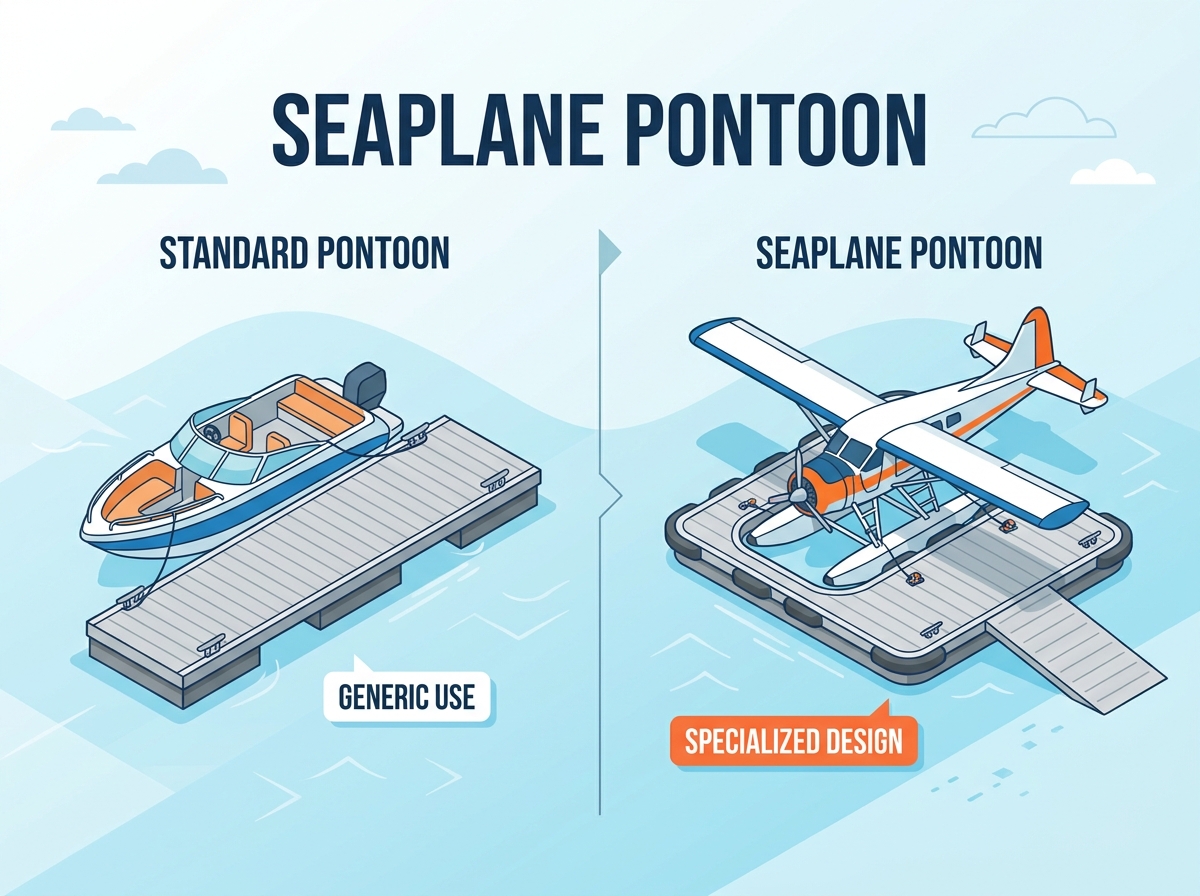
To ensure seamless operations, an expertly engineered seaplane dock maintains a strictly controlled low freeboard. By keeping the deck exactly 200mm to 300mm above the waterline, the aircraft floats can rest comfortably against the edge. Simultaneously, the wings easily clear the surface of the platform. This precise draft specification is the absolute cornerstone of safe passenger transfer. High-quality systems utilize heavy-duty High-Density Polyethylene floats filled with Expanded Polystyrene foam to guarantee this exact buoyancy level, even under heavy foot traffic.
Standard heavy-duty raised cleats are notorious for tearing into the thin aluminum skin of an aircraft float during choppy water conditions. To mitigate this severe risk, specialized platforms utilize flush-mounted mooring cleats. This ensures the deck remains entirely flat and smooth. It eliminates puncture risks while still providing secure tie-down points for turbulent weather.
When selecting the foundation for your waterfront upgrade, material choice directly dictates longevity, safety, and maintenance costs. Pushing for commercial-grade solutions pays massive dividends over time.
Traditional wooden structures rot, splinter, and warp. This creates hazardous conditions for both bare feet and delicate floats. Steel, while strong, inevitably succumbs to rust in saltwater environments. Specifically, choosing a marine-grade aluminum floating dock ensures a pristine, rust-proof, and splinter-free environment. Industry-leading manufacturers utilize 6061-T6 aluminum alloy combined with TIG welding techniques. This offers an unparalleled strength-to-weight ratio, guaranteeing a safe harbor for multi-million-dollar aircraft without the constant burden of seasonal repairs.
Water levels are rarely static. Because the platform must maintain a perfectly consistent freeboard relative to the aircraft, a floating architecture is mandatory. The structure rises and falls naturally with the tide. Furthermore, modular aluminum systems offer incredible flexibility. As your waterfront aviation traffic grows, you can easily expand the footprint. Adding T-sections or expansive L-shapes facilitates effortless turnaround maneuvers for pilots.
Beyond the structural frame, turning a basic platform into a fully functional transit hub requires integrating specialized accessories tailored specifically for pilots and passengers.
Aircraft are incredibly lightweight and surprisingly fragile compared to fiberglass boat hulls. Therefore, standard hard rubber boat bumpers are completely inadequate. A dedicated aviation jetty requires continuous, non-marking, energy-absorbing D-fenders. When the wind pushes the aircraft against the edge, the infrastructure must absorb the impact entirely to protect the plane from structural stress.
Pilots sit significantly higher than boat captains. This results in entirely different sightlines and blind spots during the final approach. Flush-mounted, solar-powered LED deck lights and high-contrast edge markers are critical. These visual aids guide the pilot safely into the slip, especially during overcast days or twilight landings. They ensure the pilot never misjudges the platform perimeter.
Passengers often step directly from the wet, curved surface of the aircraft float onto the platform. To prevent dangerous slips and subsequent liability issues, premium high-traction decking materials are essential. Micro-grooved Wood Plastic Composite or specialized grated aluminum surfaces provide superior grip, even in torrential downpours.
Recent market analyses reveal a significant pivot in coastal and lakeside infrastructure development. As ecotourism and remote luxury travel experience unprecedented growth, traditional waterfront properties are transforming from simple boat storage facilities into sophisticated, multi-modal transit hubs. This shift has prompted environmental and aviation authorities to scrutinize waterfront landing zones much more rigorously.
Consequently, the industry trend is moving rapidly away from makeshift wooden jetties. Developers are now prioritizing certified, purpose-built mooring systems that meet stringent aeronautical safety standards. By upgrading to engineered aluminum structures, resorts ensure they can cater to high-end travel networks while remaining strictly compliant with evolving regional transport regulations.
Proper installation goes far beyond simply dropping a structure into the water. Successful site planning requires a deep understanding of local environmental dynamics and aeronautical maneuverability. Here is a practical engineering checklist for your selection process.
Calculate Water Depth: Precise bathymetric measurements are required. Engineers typically mandate a minimum operational depth of 1.2 to 1.5 meters at low tide throughout the entire approach basin. A hidden shallow sandbar can easily tear the bottom out of a float.
Determine Approach Angles: Unlike heavy-hulled boats, seaplanes act like giant weather vanes. A strong gust of wind will immediately pivot the tail. The structure must be positioned parallel to the prevailing winds.
Verify Load Capacity: Ensure the pontoon design specifies a minimum load capacity of 150kg per square meter to handle passenger grouping and refueling equipment safely.
For resort managers and marina owners, upgrading infrastructure is a significant capital expenditure. However, the financial returns of catering to the aviation sector are exceptionally compelling.
The aviation demographic is frequently referred to as the premium customer base. Pilots, aircraft owners, and charter passengers generally possess high disposable incomes. By providing a safe landing zone, you directly channel this affluent clientele into your marina ecosystem. This drives substantial revenue to on-site restaurants, boutique shops, premium fuel pumps, and luxury resort accommodations. Having a certified, aviation-friendly mooring facility instantly sets your property apart from local competitors. It effectively creates a niche monopoly in your immediate geographic area.
Ultimately, treating an aircraft like a boat is a recipe for disaster. A standard marina slip is simply too high, heavily obstructed, and far too abrasive for delicate aviation equipment. To guarantee safety and operational efficiency, a purpose-built waterborne landing platform must feature a low freeboard, flush-mounted hardware, and completely unobstructed wing clearance.
By investing in a modular, premium aluminum mooring system designed specifically for the unique demands of flight, property owners can protect visiting aircraft while unlocking a highly profitable revenue stream. Do not settle for generic boat lifts. Evaluate your waterfront needs and choose professional-grade infrastructure from Horizon Marina to secure a custom site evaluation and take the first step toward modernizing your waterfront today.
It is highly discouraged and inherently dangerous. Standard slips possess high freeboards that physically block aircraft cabin doors from opening. Additionally, protruding pilings and elevated hardware can severely damage fragile wings and propellers during the approach or while moored in choppy waters.
The optimal freeboard generally ranges between 200mm to 300mm above the waterline. This specifically engineered low profile ensures the aircraft floats align perfectly with the edge, allowing passengers to step out safely and doors to swing open over the decking without any obstruction.
Aluminum offers a vastly superior strength-to-weight ratio and is completely impervious to rot, rust, or splintering. Wooden splinters or exposed nails can easily puncture composite aircraft floats. Furthermore, marine-grade aluminum requires virtually zero maintenance, making it the safest and most cost-effective long-term investment.
Yes. In addition to standard marine construction and environmental permits, you will likely need specific approvals from local aviation authorities. Depending on your region and the anticipated volume of air traffic, zoning boards may also require noise and environmental impact assessments before granting installation approval.
Financial outlays vary widely based on the overall footprint, modular complexity, and integrated accessories such as specialized fendering or aviation fueling stations. However, due to the high-value clientele that private flights bring to commercial waterfronts, property owners typically experience a rapid return on investment.
Marine engineers typically recommend a minimum operational depth of 1.2 to 1.5 meters at low tide. This ensures the aircraft floats do not strike submerged rocks, sandbars, or debris during the approach, docking, or departure phases.
Protection requires the installation of continuous, non-marking D-fenders along the entire perimeter of the pontoon. Unlike standard intermittent boat bumpers, these specialized fenders absorb impact energy evenly, preventing stress fractures on the thin aluminum or composite skin of the aircraft floats.