

Views: 0 Author: Site Editor Publish Time: 2026-07-05 Origin: Site


Modern marina development faces a harsh operational reality. Extreme weather events and increasing vessel sizes demand infrastructure that prioritizes mass, stability, and multi-decade durability. Lightweight dock systems made of wood, aluminum, or plastic fail in high-exposure or heavy-load environments. They remain vulnerable to wave action, require frequent maintenance cycles, and suffer from structural fatigue. To solve these challenges, developers specify concrete pontoons as the industry-standard solution for high-capacity, heavy-duty marine applications. These robust structures provide the displacement and structural integrity to withstand harsh saline conditions and dynamic loads. This guide evaluates the engineering principles, structural variations, and implementation requirements necessary for successfully deploying these systems in commercial and municipal marinas.
Unmatched Stability: Concrete pontoons leverage high mass and deep displacement to provide superior wave attenuation and a stable walking surface, critical for commercial operations and mega-yacht mooring.
Structural Longevity: When engineered with expanded polystyrene (EPS) cores and advanced reinforcement (e.g., glass-reinforced concrete, fiber-reinforced concrete), these systems offer a 30-to-50-year service life with minimal maintenance.
High Load Capacity: Precast concrete designs support significantly higher live and dead loads compared to alternative materials, enabling the integration of heavy utilities, fuel docks, and large-scale superstructures.
Installation Complexity: The primary trade-off is logistical; the extreme weight of a concrete pontoon requires specialized heavy-lifting equipment, precise draft calculations, and robust anchoring systems.
Commercial marina infrastructure must meet strict baseline requirements to ensure continuous operation under dynamic loads. A successful installation resists harsh saline environments, minimizes deflection under heavy foot traffic, and withstands direct vessel impact. Facilities handling large yachts or commercial fleets cannot rely on flexible, lightweight docks that twist or heave with every passing wake. The infrastructure must remain rigid, safe, and fully operational year-round. When you walk on a properly engineered heavy-displacement dock, it feels like walking on solid land. This rigidity prevents damage to moored vessels and ensures safe pedestrian access regardless of the weather conditions.
Heavy displacement physics dictate how a marina responds to water movement. The sheer mass of a Concrete pontoon dampens wave energy effectively. Instead of riding over the crest of a wave, the heavy concrete structure absorbs and reflects the kinetic energy, drastically reducing the turbulence transferred to moored vessels. When you compare the motion characteristics of a heavy displacement structure versus a lightweight dock under identical wave climates, the lightweight system pitches and rolls violently. The concrete alternative maintains a flat, stable profile, protecting both the boats and the pedestrians. We see this constantly in exposed coastal sites where fetch exceeds two miles. The mass simply overpowers the wave action.
High live loads from crowds and vehicles, combined with dead loads from transformers, pump-out stations, and heavy cleats, require immense structural support. Concrete systems handle these extreme weight requirements without compromising safety. Furthermore, concrete maintains a consistent freeboard profile even under asymmetrical loading. If a large crowd gathers on one side of the dock, or heavy equipment is staged unevenly, the deep draft and high mass prevent the structure from listing dangerously. You can drive a utility cart down one side of the dock without the opposite side lifting out of the water.
Analyzing the long-term financial model reveals distinct advantages. While the initial capital expenditure for heavy precast structures exceeds that of timber or aluminum, the operational expenditure drops drastically over a 40-year lifecycle. Wood rots, steel rusts, and aluminum suffers from fatigue cracking. High-grade marine concrete resists these common degradation factors, requiring only routine inspections of connection hardware rather than complete structural replacements.
Material Type | Wave Attenuation | Load Capacity | Expected Lifespan | Maintenance Needs |
|---|---|---|---|---|
Heavy Precast Concrete | Excellent (High Mass) | Very High | 30-50+ Years | Low (Hardware inspections) |
Aluminum Frame | Poor (Rides waves) | Medium | 15-25 Years | Medium (Fatigue checks) |
Treated Timber | Poor (Lightweight) | Low to Medium | 10-15 Years | High (Rot, splintering) |
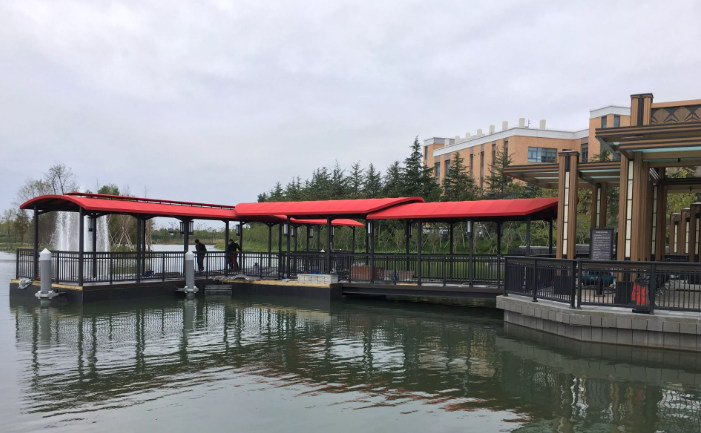
Modern precast manufacturing offers several structural variations for marine environments. Expanded polystyrene (EPS) foam-filled cores represent the gold standard for safety. Because the core consists of closed-cell foam, it prevents catastrophic sinking even if the outer concrete shell sustains a severe breach from a vessel collision. The foam displaces water permanently. We always specify EPS cores for high-traffic areas where impact risks are elevated.
Hollow concrete designs serve specific use cases, typically where internal access is required for massive utility routing or storage. However, hollow structures necessitate internal bilge systems, water alarms, and strict compartmentalization to prevent sinking if a leak occurs. They require active management.
Glass-reinforced concrete (GRC) and fiber-concrete floats provide another alternative. Thin, high-strength fiber concrete skins encapsulating EPS cores offer extreme toughness and impact resistance at a highly optimized weight profile. This hybrid approach reduces transport challenges while maintaining the durability expected in marine environments.
Marine-grade concrete requires a highly specific mix design. Engineers specify a low water-to-cement ratio, low permeability, and high compressive strength to prevent saltwater ingress. Preventing chloride-induced corrosion is the primary goal. You cannot use standard residential concrete mixes in a saltwater basin.
Epoxy-Coated Rebar: Provides a physical barrier against chlorides, though it can be compromised if chipped during installation.
Galvanized Steel: Offers a sacrificial zinc layer, extending the time before the underlying steel begins to rust.
Stainless Steel: Highly resistant to corrosion but comes with a significant material cost premium.
GFRP (Glass-Fiber Reinforced Polymer): Completely eliminates the risk of internal rusting and subsequent concrete spalling, making it the preferred choice for modern marine structures.
Determining optimal freeboard depends entirely on the target vessel size. A low freeboard suits rowing clubs or small sailing dinghies, allowing easy access to the water. Conversely, superyachts require a high freeboard to align safely with their massive hull doors and boarding gangways. We match the freeboard to the primary user demographic of the specific dock section.
Draft calculations directly impact anchoring design and minimum water depth requirements. A heavy Floating Pontoon draws significantly more water than a plastic dock. Engineers must ensure the structure will not ground out during extreme low tides, which could damage the hull of the float or destroy the anchoring connections. Grounding a heavy concrete unit on uneven bedrock will crack the hull.
Modern marinas function as floating cities, requiring extensive utility networks. Design integration includes continuous, internal, or recessed service ducts cast directly into the concrete. These chases safely house heavy utility lines below deck level, including three-phase electricity, potable water, fire mains, high-capacity fuel lines, and fiber-optic data cables. Keeping these lines internal protects them from UV degradation, impact damage, and pedestrian tripping hazards. We cast these trenches with removable composite lids for easy maintenance access.
Mooring hardware must withstand massive dynamic forces. Cast-in steel or composite fixing channels, such as anodized aluminum tracks, allow for adjustable cleat positioning and easy fender replacement. This modularity accommodates different vessel sizes over the marina's lifespan. You can slide a heavy-duty cleat exactly where the vessel's spring line dictates.
Protective edge-fendering materials absorb vessel impact during docking maneuvers. Options include heavy-duty elastomeric D-fenders, pressure-treated timber walers, or advanced composite bumpers. The choice depends on the expected vessel tonnage and the required aesthetic finish. For commercial fishing docks, we use thick rubber D-fenders. For yacht clubs, we might use polished composite walers.
The walking surface requires careful consideration for both safety and aesthetics. Surface finish options can be cast directly into the concrete, such as a brushed non-slip texture, stamped patterned tile, or exposed aggregate. These integral finishes offer extreme durability and require zero secondary installation.
Alternatively, structural provisions allow for attaching secondary premium walking surfaces. High-end yacht clubs often specify natural hardwood timber, composite decking, or fiberglass grating bolted over the concrete base to achieve a specific architectural look while maintaining the heavy displacement benefits below. We cast threaded inserts directly into the deck to accept the timber sleepers.
Mapping specific configurations to their ideal operational environments ensures structural success. Engineers evaluate wave fetch, wind loads, tidal range, and vessel displacement to determine the exact mass and dimensions required for the site. You do not put a massive breakwater pontoon in a sheltered, shallow creek.
Securing vessels over 80 feet demands high-mass infrastructure. Mega yacht harbors rely heavily on massive concrete structures to handle the extreme pull forces exerted on mooring cleats during storm events. These facilities also require high-capacity utility routing to provide the massive electrical loads and rapid fueling capabilities demanded by superyachts. A 150-foot yacht will rip a standard aluminum dock apart during a gale.
Specialized, deep-draft designs serve as active wave attenuators. Deployed at the perimeter of a marina, these massive structures protect inner slips from fetch and wake. They feature wider beams and deeper skirts than standard walkways, specifically engineered to break wave energy and create a calm basin for smaller vessels moored inside. We often design these with a draft exceeding two meters to stop short-period waves.
Industrial applications require raw durability. Commercial fishing fleets need docks that can withstand severe impact resistance from heavy steel hulls. Furthermore, these facilities must support heavy loading equipment, catch hoists, forklifts, and light vehicular access directly on the deck surface. The concrete deck acts as a working platform, not just a walkway.
A heavy displacement dock is only as reliable as its anchoring and connection hardware. If the anchoring fails, the mass of the dock becomes a liability, capable of destroying everything in its path. Proper engineering of the mooring system is non-negotiable. We spend as much time designing the anchors as we do the floats.
Anchoring solutions depend on bathymetry and seabed composition. You must match the anchor to the soil.
Driven steel or concrete piles work best for shallow to medium depths. Pile guides utilize low-friction roller assemblies to allow smooth vertical movement during tidal shifts.
Tensioned elastic mooring systems provide excellent performance in deep water, ecologically sensitive seabed zones, or areas with extreme tidal variations. These systems keep the dock centered while absorbing shock loads.
Traditional catenary curve anchoring uses heavy chain and concrete blocks. While effective, this method requires a large seafloor footprint and constant monitoring for bottom-chain wear.
Managing shear forces, bending moments, and torsion between adjacent modular units requires critical engineering. Semi-flexible rubber-bushed bolt connections act as shock absorbers, allowing slight articulation between units to dissipate wave energy. Conversely, continuous post-tensioned cable systems rigidify a multi-unit structure, creating a massive, monolithic breakwater that acts as a single immovable object. We use post-tensioning when we need the entire dock line to act as a wave screen.
The extreme weight of these structures introduces significant logistical hurdles. Heavy-lift requirements dictate the use of specialized crane barges and high-capacity road transport. Engineers must coordinate road weight limits, bridge clearances, and shipyard staging requirements well in advance of delivery. You cannot simply back a standard flatbed up to the water and push these off.
Proper installation follows a strict operational sequence to ensure safety and structural integrity.
Phase 1: Delivery & Launch: Offloading the units from transport vehicles and launching them into the water via heavy-duty cranes or specialized slipways.
Phase 2: Towing & Positioning: Executing safe marine towing protocols to move the heavy units into position over the target footprint.
Phase 3: Connection: Securing the modular units together using specialized connector bolts, tensioned to strict torque specifications.
Phase 4: Anchoring: Finalizing the installation by connecting and tensioning the anchoring system, whether using piles, elastic rodes, or catenary chains.
Concrete shrinkage and flexural micro-cracking are natural realities of the material. To mitigate water ingress, manufacturers implement proper wet-curing protocols and utilize specialized crystalline waterproofing admixtures that self-heal hairline cracks. Routine inspection schedules ensure any surface anomalies are addressed before saltwater reaches the internal reinforcement. We seal the decks immediately after curing to prevent freeze-thaw damage in colder climates.
The highest-risk failure points exist at the steel components connecting the units together. Maintenance protocols must mandate regular inspections of structural bolts. Marina operators must replace worn rubber dampeners and actively monitor sacrificial zinc anodes to prevent galvanic corrosion from destroying the connection hardware. If the anodes deplete, the saltwater will attack the structural bolts next.
Conduct a comprehensive site survey including bathymetry, geotechnical seabed analysis, and wave modeling to define baseline environmental loads.
Calculate all required live and dead loads, including utility weights, pedestrian traffic, and potential vehicular access requirements.
Consult with specialized marine engineers to finalize structural specifications, anchoring designs, and installation logistics based on site access.
Establish a routine maintenance schedule focused on inspecting connection hardware, pile guides, and sacrificial anodes to ensure multi-decade durability.
A: They typically offer a 30 to 50-year lifespan. The exact longevity depends heavily on the type of internal reinforcement used, the quality of the marine-grade concrete mix, and the severity of environmental exposure at the installation site.
A: The main differences lie in mass, stability, and load capacity. Aluminum systems are lightweight and suited for sheltered, light-duty areas. Concrete systems provide massive displacement, high stability, and heavy load capacity, making them ideal for exposed, heavy-duty commercial environments.
A: In deep water, engineers typically utilize tensioned elastic mooring systems or traditional heavy chain and concrete block configurations. These methods accommodate significant depth and tidal variations without requiring massive, impractical piles.
A: Standard walkways are not ideal for wave attenuation. Specifically engineered wave attenuators feature deeper drafts, wider beams, and heavier mass to effectively break wave energy and protect inner marina basins.
A: The concrete shell requires minimal upkeep. Maintenance focuses on annual inspections of the connection hardware, pile guides, rubber dampeners, and mooring lines to ensure structural integrity and prevent galvanic corrosion.
A: Weights vary significantly based on design, but they generally range from 1.5 to over 3 tons per linear meter. This extreme weight necessitates specialized heavy-lifting equipment and careful logistical planning for transport and installation.
A: No, provided it utilizes an EPS foam core. The expanded polystyrene foam maintains positive buoyancy, displacing water permanently even if the outer concrete shell suffers a major breach from a vessel impact.